
Health Sharing Plans vs Private PPO for Self-Employed in 2027: An Honest Comparison
If you’re self-employed and shopping for health coverage, you’ve probably run into health sharing ministries — the Medi-Share and Christian Healthcare Ministries-style programs that promise lower monthly costs than traditional insurance. The question I get a lot is a fair one: when you’re comparing health sharing vs private health insurance, which one is actually the better deal?
I’m going to give you the honest-broker version, because these products are fundamentally different things, and the wrong choice here can leave you holding a very expensive bag. I’ll show you where each one wins and who each one is actually for.
Table of Contents
What Health Sharing Ministries Actually Are (and Aren’t)
This is the most important section in this article, so read it twice.
Health sharing ministries are not insurance. Let me say that again in plain English: a health care sharing ministry is a membership organization where members agree to share each other’s medical bills. There is no insurance contract. There is no legal obligation to pay your bills. If the ministry’s members don’t have enough money in a given month, your bill may be partially paid, delayed, or not paid at all.
That means three things that matter enormously:
- No guaranteed payment of your medical bills. With real insurance, the carrier is contractually obligated to pay covered claims. With a sharing ministry, payment is voluntary — generous in practice, usually, but voluntary.
- No regulatory protection. State insurance departments regulate insurance companies. If your carrier wrongly denies a claim, you have regulators and courts behind you. Sharing ministries operate outside that system.
- Limited pre-existing condition sharing. Most ministries restrict or phase in how they handle pre-existing conditions — sometimes with multi-year waiting periods before they’ll share anything related to them.
None of this means sharing ministries are scams. They’re not. They work for a lot of healthy families. But you need to walk in with your eyes open about what you’re buying.
The Real Tradeoffs: Lower Monthly Cost vs No Guaranteed Payment
The appeal of health sharing is simple: the monthly “share” is often noticeably lower than a full-price insurance premium. For a healthy self-employed person staring at an $800/month unsubsidized marketplace bill, a ministry asking half of that is tempting — and for routine, healthy years, it can genuinely feel like a win.
The tradeoff is risk you can’t see until something goes wrong. A $120,000 cancer diagnosis or a $60,000 emergency surgery is exactly when the difference between “contractually obligated to pay” and “members will do their best” becomes a life-altering distinction. Insurance exists for the catastrophic scenario, not the easy years. Sharing ministries are at their weakest precisely in the scenario you most need coverage to work.
You also need to know that most ministries have their own rules around lifestyle — faith statements, church attendance, abstaining from tobacco and excessive alcohol, sometimes restrictions related to out-of-wedlock pregnancy. Those rules aren’t necessarily a problem for members who share those values, but they are eligibility conditions, not just suggestions.
Where a Private Underwritten PPO Wins
For a healthy self-employed buyer, a private off-exchange PPO typically beats a sharing ministry on every dimension that matters when you’re actually sick:
Contractual obligation to pay. A private PPO is an insurance contract. When your claim is covered under the policy, the carrier pays — that’s a legal obligation, not a hope. That’s the single biggest difference between health sharing vs private health insurance, and it should weigh the heaviest.
Real PPO networks. Private plans come with established PPO networks, so you can see the specialists and hospitals you want without hunting for providers willing to take ministry “self-pay” rates.
Prescription drug coverage. This is an underrated one. Most sharing ministries cover prescriptions poorly or not at all — some only share costs for limited courses of medication. If you take maintenance prescriptions, that gap adds up fast. Private PPO plans include real prescription benefits.
Comparable monthly cost. Here’s the part that surprises people: These private off-exchange PPO plans usually cost almost half as much as a full-price marketplace plan with no subsidies, as long as there are no major health conditions. That puts a real insurance policy in the same monthly neighborhood as many ministry shares — except with an actual contract behind it. If you’re curious who writes these plans, here’s a rundown of the best private health insurance companies and how to evaluate them.
One honest caveat, though: private plans are medically underwritten. Underwriting can accept, rate, postpone, or decline you based on your health history. A ministry may take you when a private plan won’t. But if you’re healthy enough to qualify, the private PPO is the stronger product — which is exactly why these plans still exist as real major medical coverage outside the ACA marketplace.
Where Health Sharing Can Make Sense
I’m not here to talk you out of a ministry if it’s genuinely the right fit. Sharing can make sense when:
Faith alignment matters to you. Many members choose ministries partly because their dollars go to a community that shares their values — including values around which procedures the ministry will and won’t share costs for. If that alignment matters to you personally, it’s a legitimate reason.
You’re healthy, young, and low-utilization. A healthy 28-year-old freelancer who hasn’t seen a doctor in two years is taking less risk in a ministry than a 55-year-old with a heart condition. The risk gap between sharing and insurance shrinks when your expected medical spending is near zero — though it never disappears entirely, because accidents don’t check your health history first.
You’ve been declined or rated out of private coverage. If underwriting didn’t go your way, a ministry can be a reasonable fallback — just understand exactly what it does and doesn’t guarantee before you rely on it.
Honest Monthly-Cost Framing for a Healthy Self-Employed Adult
I won’t throw around specific dollar figures I can’t verify for your situation, because ministry shares and private premiums both vary by age, household size, and plan details. But the honest framing is this: for a healthy self-employed adult, a private underwritten PPO and a ministry share often land in a similar monthly range. The difference isn’t really the price — it’s what backs the promise.
One is a membership where fellow members share costs as they’re able. The other is a contract where a licensed carrier is obligated to pay covered claims, with a PPO network and prescription coverage attached. At similar money, the contract is the better product for most people. The only question is whether you can pass underwriting — and that’s a question answered in about five minutes with a free quote.
If you’re newly self-employed and weighing all your options from scratch, this guide to private health insurance for the self-employed walks through the full picture.
The Bottom Line
Health sharing ministries aren’t insurance, and judging them as if they were is how people get hurt. They can be a reasonable fit for faith-aligned, healthy, low-utilization households who understand the risks. But for most self-employed buyers who qualify, a private underwritten PPO delivers similar monthly cost with a genuine insurance contract, real PPO networks, and prescription coverage — the things that actually matter when a big bill arrives.
Don’t pick based on the monthly number alone. Pick based on what happens on your worst day.
Get a free quote at myprivatehealthinsurance.com or call 561-927-9469. I’ll run your private PPO numbers side by side with what you’re paying a ministry now — and I’ll tell you straight whether you can actually beat it with real insurance, or whether you’re better off where you are.
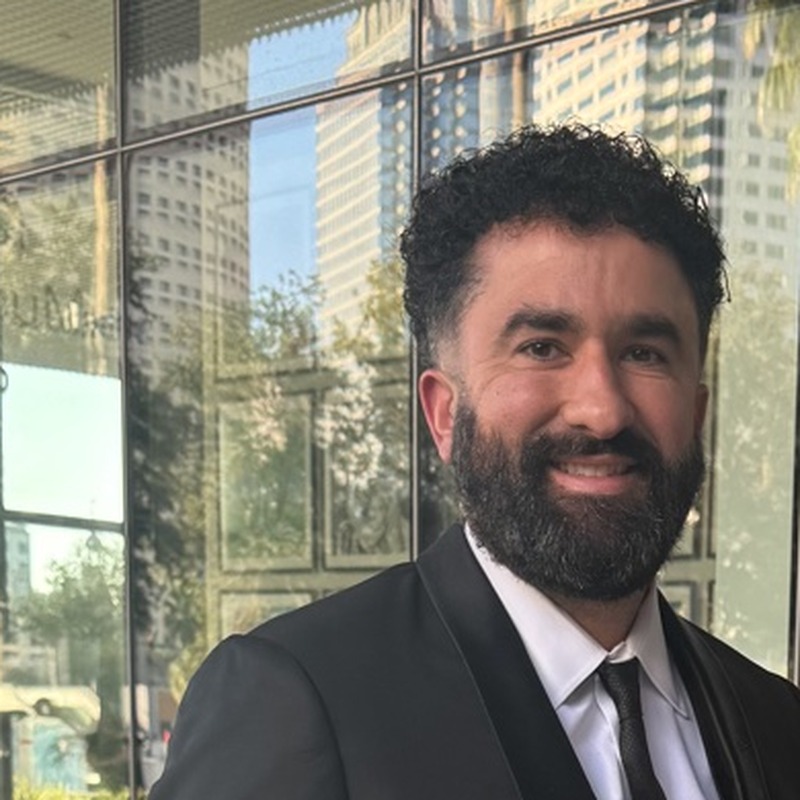
Justin Brain is a licensed health insurance agent (licensed since 2016, National Producer Number (NPN) #17940663) and founder of My Private Health Insurance in Fort Lauderdale, Florida. He has helped self-employed professionals, 1099 contractors, and small business owners in 33 states secure private, off-exchange health coverage — often at about half the cost of full-price marketplace plans. His team specializes in medically underwritten PPO plans for people who earn too much for ACA subsidies.