
Hiring Your First Employee in 2027? What Happens to Your Private Health Plan
Congratulations — the business is growing. But somewhere between the job posting and the offer letter, a question lands: what happens to your health insurance when you go from solo operator to employer?
If you’re on a private underwritten plan, the short answer is: nothing has to change. Hiring your first employee doesn’t invalidate your individual coverage. But it does open new options — and new obligations — worth understanding before you sign anything.
Table of Contents
Your Private Plan Survives the Hire
Let’s clear up the biggest misconception first. Individual health insurance — whether private underwritten or marketplace — is yours personally. Becoming an employer doesn’t cancel it, disqualify you, or force you onto a group plan. You can hire your first, fifth, or fiftieth employee and keep your individual private PPO exactly as it is.
This surprises people because the ACA’s employer mandate looms large in business lore. But the mandate only applies to employers with 50 or more full-time-equivalent employees. With one employee — or ten, or forty-nine — there is no federal requirement to offer health coverage at all.
So the baseline: hire freely. Your private plan, with its underwritten pricing (typically half the cost of full-price marketplace coverage) and year-round flexibility, stays intact. The question isn’t what you’re forced to do — it’s what you should consider doing.
Option 1: Keep Your Individual Plan, Offer Nothing (For Now)
With a single employee, you’re not required to offer health benefits. Many micro-businesses at the one-employee stage offer no health coverage and instead pay slightly higher wages, letting the employee shop the marketplace — where, unlike you, they may qualify for subsidies based on their own income.
This is legal, common, and often the right call in year one. Considerations:
- Competitiveness. In a tight labor market, even a modest health benefit helps you hire. But cash compensation the employee can use anywhere sometimes beats a bare-bones group plan.
- Your costs stay flat. Your individual private premium doesn’t change because you hired someone. No group administration, no participation requirements, no renewal negotiations.
- Simplicity. No ERISA plan documents, no COBRA administration (that kicks in at 20+ employees), no annual group enrollment process.
Option 2: QSEHRA — Reimburse Instead of Insuring
The Qualified Small Employer Health Reimbursement Arrangement (QSEHRA) is purpose-built for businesses with fewer than 50 employees. Instead of buying a group plan, you reimburse your employee tax-free for their individual health insurance premiums and medical expenses, up to an annual cap you set.
Why this pairs beautifully with private plans in 2027:
- You keep your private underwritten plan. The QSEHRA is for your employee’s coverage, not yours. Your own insurance stays exactly as it is.
- Your employee shops individual — marketplace or private. They pick what fits them, and you reimburse up to the cap. If they’re healthy, they might choose a private underwritten plan too — stretching your reimbursement dollars further than a group plan would.
- Predictable costs. You set the allowance. No surprise renewal spikes, no participation minimums to meet.
- Tax advantages. Reimbursements are tax-deductible for the business and tax-free for the employee (with some interaction with premium tax credits to navigate — employees receiving QSEHRA funds may have reduced marketplace subsidies, so coordinate carefully).
The arrangement requires a formal plan document and employee notices, but administration is light compared to group insurance.
Option 3: Small Group Plan
You can buy a traditional small-group health plan with as few as one full-time employee (plus yourself, depending on state rules — most states let a business owner plus one full-time W-2 employee qualify). Group plans are guaranteed issue with no medical underwriting, which matters if your employee has health conditions.
The honest math for micro-businesses: small-group plans are usually the most expensive option per person. Insurers price small groups cautiously, administrative costs are spread across few members, and you lose the underwriting discount that makes your individual private plan cheap. Our comparison of group vs. private plans for a 2-employee business in 2027 walks through the numbers — the gap is often thousands per year.
When group makes sense: your employee has significant health issues, you want the recruiting signal of “we offer health insurance,” or you’re in a state with competitive small-group rates.
What Changes for Your Taxes
A few tax notes for the newly-employing business owner:
- Your own premiums remain deductible under the self-employed health insurance deduction (above the line), as long as the business shows net profit. Hiring doesn’t change this.
- QSEHRA reimbursements are a deductible business expense — compensation, essentially, delivered as health benefits.
- Group plan premiums you pay as the employer are deductible business expenses, and the employee’s share can come out pre-tax.
- S-corp owners: if you’re a 2%+ shareholder, your own premiums must run through W-2 wages to preserve the deduction — set this up with payroll before year-end.
The Decision Framework
For most businesses hiring employee #1 in 2027, the decision tree looks like this:
- Is your employee generally healthy? → Individual private plan for you (unchanged) + QSEHRA reimbursement for them.
- Does your employee have significant health conditions? → Consider a small-group plan’s guaranteed issue, or marketplace coverage plus QSEHRA support.
- Is health coverage central to your hiring pitch? → A group plan sends a stronger signal, but a generous QSEHRA plus higher wages can compete at lower cost.
The key insight: hiring your first employee expands your options without threatening your own coverage. Your private plan stays, your costs stay flat, and QSEHRA lets you offer a real health benefit at a fraction of group-plan cost.
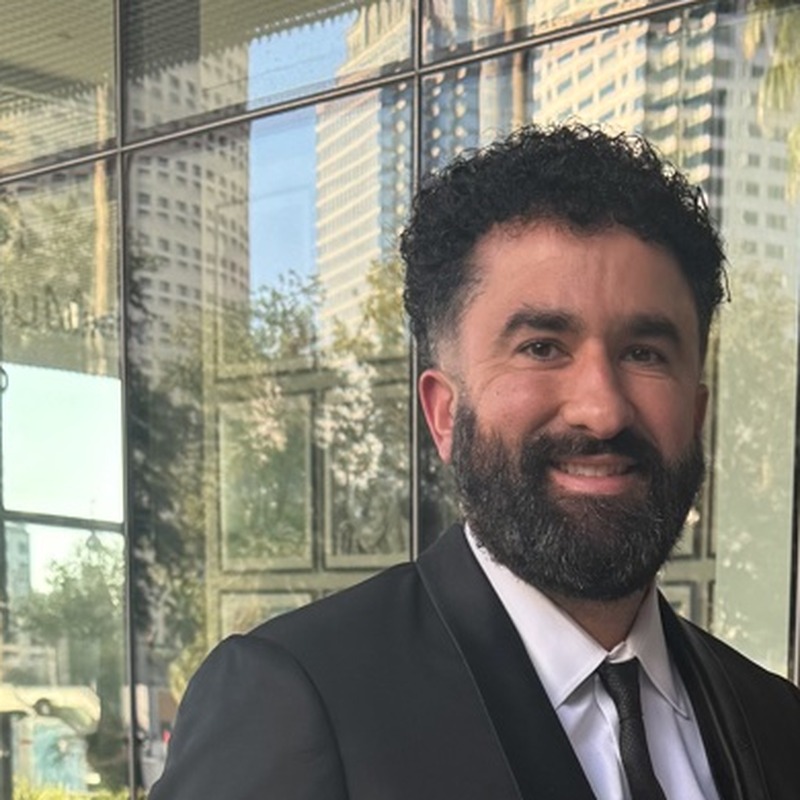
Justin Brain is a licensed health insurance agent (licensed since 2016, National Producer Number (NPN) #17940663) and founder of My Private Health Insurance in Fort Lauderdale, Florida. He has helped self-employed professionals, 1099 contractors, and small business owners in 33 states secure private, off-exchange health coverage — often at about half the cost of full-price marketplace plans. His team specializes in medically underwritten PPO plans for people who earn too much for ACA subsidies.